
A website is no longer just an online brochure. It represents your brand, creates the first impression for potential customers, and often plays a major role in generating leads and sales. Whether you own a real estate agency, an eCommerce store, or a corporate business, choosing the right web design company can have a lasting impact on your success.
Choosing the right web design company involves more than comparing prices or reviewing portfolios. A successful website should have a clear strategy, deliver a smooth user experience, load quickly, and be optimized for search engines.
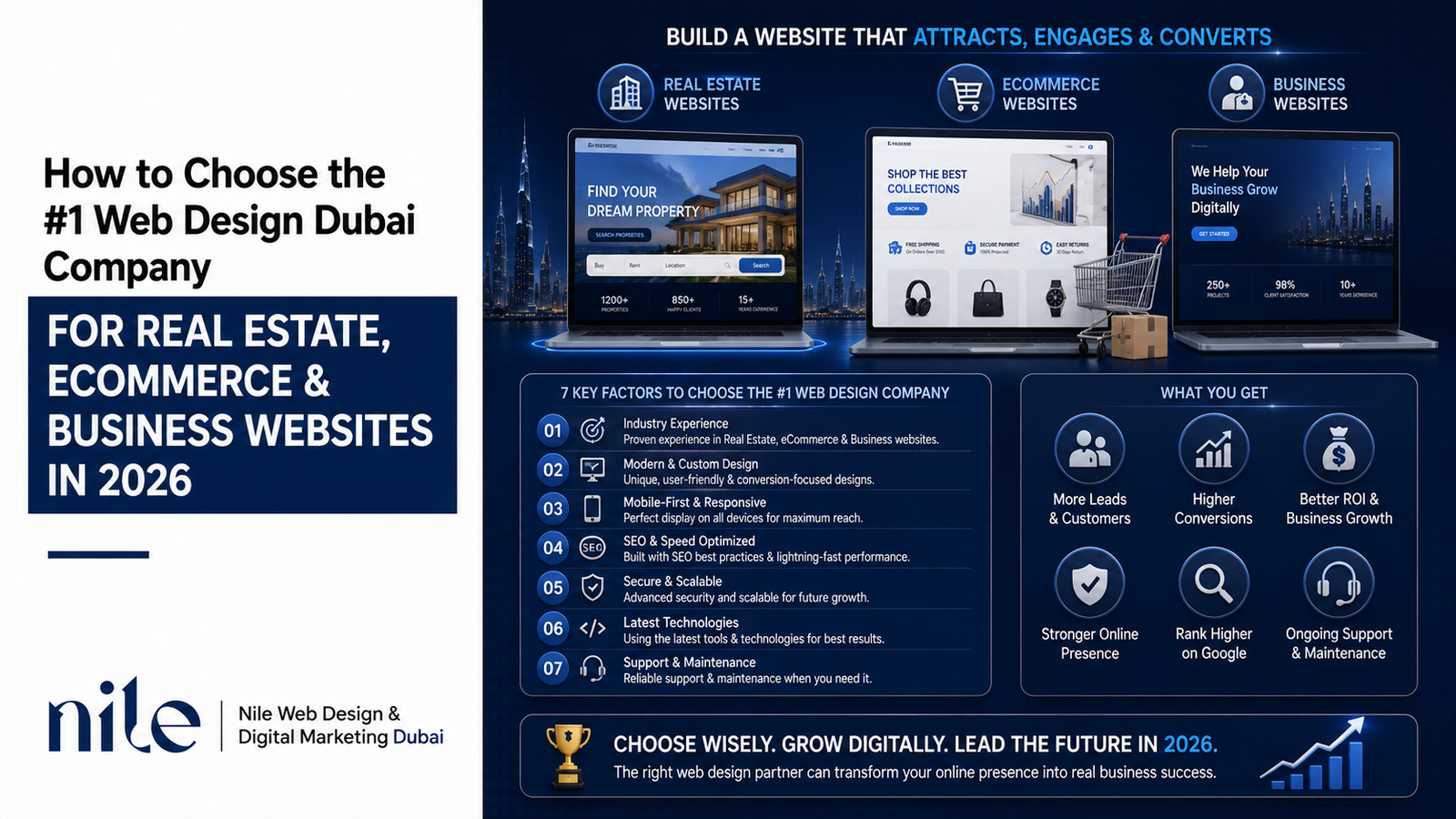
In 2026, businesses should prioritize agencies that offer responsive design, strong security, SEO-friendly development, and ongoing support. The right web design company creates a website that looks professional, performs well on all devices, and helps turn visitors into customers for long-term business growth.
Why Your Website Matters More Than It Used To
People don’t just stumble onto a business anymore. They research, compare, read reviews, and check out a company’s website long before they ever pick up the phone. A well-built site does a lot of quiet work in the background — it builds trust, brings in better quality leads, keeps people engaged, sharpens how your brand comes across, backs up everything else you’re doing in marketing, and ultimately pushes more visitors toward becoming customers.
The businesses that take their digital presence seriously tend to pull ahead of the ones still running on a website that hasn’t been touched in five years.
Don’t Judge an Agency on Looks Alone
It’s tempting to pick whoever has the flashiest portfolio, but looks are only part of the equation. A website that actually works for your business needs to be built around a plan, not just a design file. That means thinking through the user’s journey, keeping load times fast, making sure it works properly on a phone, building it with search engines in mind from day one, and structuring the page so visitors know exactly what to do next.
A gorgeous website that nobody converts on isn’t really doing its job.
Look for Real Industry Experience
A real estate site and an online store need almost entirely different things. Before you sign with anyone, ask to see work they’ve done for businesses like yours specifically.
For property businesses, that usually means checking whether they’ve actually built things like property listing pages, filtered search tools, CRM connections, lead capture systems, interactive maps, and content aimed at investors rather than just casual browsers. An agency that’s done this before will plan around problems you haven’t even thought of yet.
Actually Go Through Their Portfolio
Don’t just skim it — dig in. Look at how the designs feel today, not five years ago. Click through the navigation and see if it’s actually intuitive or if you have to think about where to go next. Pull it up on your phone and see how it holds up. And check whether they’ve worked across different industries, which usually says a lot about how adaptable they are.
A strong portfolio tends to show the same thing over and over: consistency, some genuine creative thinking, and technical polish that doesn’t fall apart under scrutiny.
Mobile Has to Come First, Not Last
Most of your traffic, whatever industry you’re in, is probably arriving on a phone. A site that only really works on desktop is quietly turning away a big chunk of potential customers before they even get a chance to engage.
Getting mobile right pays off in more ways than one — people stay engaged longer, search engines reward it, leads come in more consistently, and customers simply have a better experience overall.
Speed Isn’t Optional Anymore
Nobody waits around for a slow website these days. If a page takes too long to load, people bounce, engagement drops, conversions suffer, and the whole experience feels off before it’s even begun.
When you’re talking to an agency, ask them directly how they handle performance — how they compress images, how clean their code actually is, and what kind of caching setup they use. Fast websites don’t just feel better to use; they tend to rank better too.
Ask How They Actually Think About SEO
Search visibility is one of the few marketing assets that keeps paying off long after launch. A good agency doesn’t bolt SEO on afterward — they build the site’s foundation with it in mind from the start.
That includes clean site structure, sensible URLs, well-organized content, the technical groundwork search engines look for, schema markup, mobile responsiveness, and fast load times. If you’re looking into web design in Dubai specifically, it’s worth prioritizing agencies who treat design and SEO as one conversation, not two separate departments.
Traffic Means Nothing Without Conversions
Getting people to your site is only half the job. The real question is whether your website actually nudges them toward doing something — filling out a form, calling you, sending a property enquiry, buying a product, or booking a consultation.
Good conversion optimization comes down to understanding how people actually behave on a page, laying things out strategically, building in trust signals, placing calls-to-action where people will actually notice them, and structuring content so it leads somewhere. The agencies that get this right are the ones that turn browsers into paying customers.
What Real Estate Websites Specifically Need
Property websites carry their own set of demands. The ones that work well usually include solid property search functionality, area guides, lifestyle-focused content, tools to capture leads, interactive maps, and dedicated project showcase pages.
Buyers, tenants, and investors all expect a smooth digital experience these days, and a well-built real estate site does double duty — it builds credibility while quietly generating qualified enquiries in the background.
What Online Stores Specifically Need
eCommerce keeps growing, and if you’re evaluating agencies for e-commerce web design in Dubai, look closely at whether they can build a store that’s genuinely mobile-friendly, has secure and reliable payment processing, offers a checkout flow that doesn’t lose people halfway through, organizes products in a way that makes sense, connects properly with inventory systems, and is built with conversions in mind throughout.
The path a customer takes from landing page to checkout is often what makes or breaks online sales.
Launch Day Isn’t the Finish Line
Once a website goes live, the work isn’t over — it’s just starting a new phase. Ongoing support usually covers things like security patches, performance tuning, content updates, general maintenance, and adding new features as your business grows.
A good agency doesn’t disappear after the invoice is paid. They stick around and keep supporting your site as your needs change.
Questions Worth Asking Before You Hire
- Can you show me projects similar to mine?
- What technologies do you actually build with?
- How do you approach SEO from the start?
- What kind of support do I get after launch?
- How do you define and measure success?
These aren’t formalities — the answers tell you a lot about whether an agency is thinking long-term or just trying to close a deal.
Strategy Beats Trends, Every Time
Design trends come and go, but what a business actually needs stays fairly consistent — a site that serves real user needs, supports business goals, creates conversion opportunities, and can scale as things grow.
Chasing whatever’s trendy this year isn’t a strategy. Building something that still works three years from now is.
Where Website Design Is Heading in 2026
A few things are clearly shaping how modern websites get built: AI-assisted experiences that adapt to users, faster performance across the board, deeper personalization, better accessibility, stronger mobile experiences, tighter security, and decisions increasingly driven by real data rather than guesswork.
Businesses that lean into these shifts now tend to stay ahead of the curve rather than scrambling to catch up later.
Conclusion
Picking the right website partner is one of the bigger digital decisions a business will make. The agencies worth working with bring together strategy, design sense, technical skill, and marketing know-how into something that actually supports growth — not just something that looks good on day one.
Whether you’re running a real estate company, an online store, or any other kind of business, a well-built website lays the groundwork for visibility, trust, and results that compound over time.
Instead of chasing the lowest price or the flashiest design, look at experience, technical depth, user experience thinking, performance, and what happens after launch. That’s the decision that actually pays off down the line.
FAQs
How much does a professional website cost in 2026?
It really depends on the functionality and complexity involved. Custom-built sites cost more upfront than template-based options, but they usually offer more flexibility long-term.
Why does mobile responsiveness matter so much?
Because most people are browsing on their phones. A responsive site makes sure the experience holds up no matter what screen someone’s using.
How long does building a website usually take?
Anywhere from a few weeks to several months, depending on how much functionality is involved.
Why bother investing in professional website development at all?
Because it directly affects how credible you look, how good the customer experience is, how well your marketing performs, and ultimately how many enquiries and sales come through.
How do I choose the right website design company for my business?
Start by checking their portfolio for work in your industry, ask about their approach to SEO and performance, confirm what support they offer after launch, and get a clear sense of how they define and track success — not just how the final design looks.
What should a real estate website include to generate more leads?
At minimum, it should have a strong property search function, clear contact and enquiry forms, interactive maps, area guides, and fast-loading listing pages. Lead capture tools built into the site — not bolted on later — tend to perform much better.
How much does real estate website development cost in Dubai?
Costs vary widely depending on features like property search, CRM integration, and custom design work. A basic informational site costs far less than a fully custom platform with advanced search and lead management tools.
Can a website really compete with property portals like Bayut or Property Finder?
A branded website won’t replace portals, but it plays a different role — it builds trust, keeps leads within your own funnel instead of a shared marketplace, and lets you control the entire customer journey and brand experience.
Do I need a mobile app in addition to a website, or is a responsive website enough?
For most real estate and business websites, a well-built responsive site covers mobile users effectively. An app usually only makes sense once you have a large returning user base or need features a browser genuinely can’t support.
How often should a business website be redesigned or updated?
There’s no fixed rule, but most businesses revisit their site every 2–3 years, or sooner if performance, mobile usability, or conversion rates start slipping. Regular smaller updates in between usually matter more than a full redesign.